A primary reading series developed with UCL Institute of Education to help children become confident, independent readers.
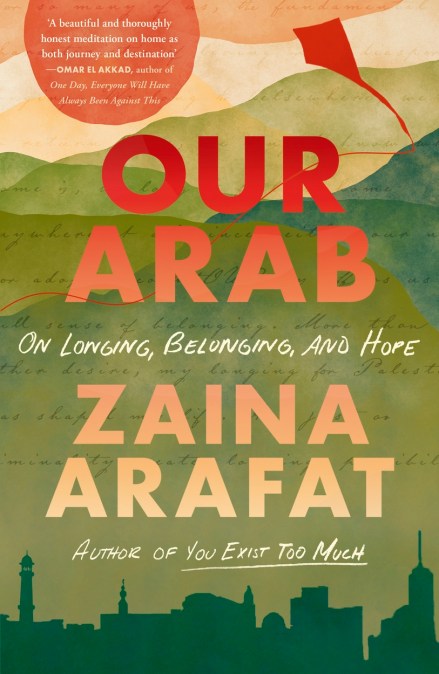
‘Precise, vulnerable and deeply thought-through . . . One is left with the sense that belonging is not some binary state, but rather an ongoing, ever-expansive act’ Omar El Akkad, author of One Day, Everyone Will Have Always Been Against This
‘With humour and affection, Zaina Arafat weaves the improbable details of her Palestinian family’s splintered journey post-dispossession’ Kerry Howley, author of Bottoms Up and the Devil Laughs
Fewer and fewer Palestinians living in the diaspora have direct experiences of their homeland. So how does one maintain a connection to a land so volatile, ever shrinking, and nearly unattainable? And how can a child of diaspora raise a child of diaspora, at a time when Palestinians throughout the world-particularly those living in their homeland-are more vulnerable than ever to censorship, violence, and erasure?
In essays that move from Nablus to the Appalachian Mountains and from Amman to Manhattan, Zaina Arafat explores how to exist in this state of longing: longing to be elsewhere, longing to return home, and longing to know what home is. Holding many truths at once-about society, identity and family-and flashing with radical compassion, fierce pride, bitter loss and righteous anger, Our Arab is a call to action, a call to love, and an incredibly complex portrait of what it means to be Palestinian today.
‘Beautifully written and bracingly honest, Our Arab is a meditation on displacement, memory, and the fragile, enduring work of making a life’ Hala Alyan, author of I’ll Tell You When I’m Home
‘With humour and affection, Zaina Arafat weaves the improbable details of her Palestinian family’s splintered journey post-dispossession’ Kerry Howley, author of Bottoms Up and the Devil Laughs
Fewer and fewer Palestinians living in the diaspora have direct experiences of their homeland. So how does one maintain a connection to a land so volatile, ever shrinking, and nearly unattainable? And how can a child of diaspora raise a child of diaspora, at a time when Palestinians throughout the world-particularly those living in their homeland-are more vulnerable than ever to censorship, violence, and erasure?
In essays that move from Nablus to the Appalachian Mountains and from Amman to Manhattan, Zaina Arafat explores how to exist in this state of longing: longing to be elsewhere, longing to return home, and longing to know what home is. Holding many truths at once-about society, identity and family-and flashing with radical compassion, fierce pride, bitter loss and righteous anger, Our Arab is a call to action, a call to love, and an incredibly complex portrait of what it means to be Palestinian today.
‘Beautifully written and bracingly honest, Our Arab is a meditation on displacement, memory, and the fragile, enduring work of making a life’ Hala Alyan, author of I’ll Tell You When I’m Home
Reviews
A stunning collection . . . at once sharp and deeply lyrical . . . These essays speak to the quiet negotiations of belonging that shape mothering, love, creative practice between places. Beautifully written and bracingly honest, Our Arab is a meditation on displacement, memory, and the fragile, enduring work of making a life.
A beautiful and thoroughly honest meditation on home as both journey and destination. Amidst a decades-long campaign of erasure, amidst virulent racism and repression, amidst a genocide, Arafat interrogates what it means to be rooted to Palestinian and American identities, memories and ways of being in the world. Every word, every detail of time and place, rings true, and having read these precise, vulnerable and deeply thought-through essays, one is left with the sense that belonging is not some binary state, but rather an ongoing, ever-expansive act.
A moving, insightful, intelligent, never didactic meditation on the very idea of home. With humour and affection Zaina Arafat weaves the improbable details of her Palestinian family's splintered journey post-dispossession . . . Our Arab is a chronicle of the Palestinian experience that will find resonance with anyone who has ever been in love, taught high school English, mined coal, mothered a child, or indulged the fantasy of permanence.
Arafat brings her singularly compelling voice-compassionate, wry, curious, furious, and saturated with devotion-to the complexities and heartache of Palestinian diasporic life . . . This is an account of heartbreak that is also full of radiance.
Outstanding . . . Throughout, [Arafat] explores her own psyche, detailing minute reactions and feelings that emerge from her daily life, relationships, and personal milestones, but that also intertwine in unexpected ways with the maddening reality of living in a world that refuses to acknowledge the daily crimes perpetrated against her people. Clarifying and powerful, this probes at the wounded hearts of Palestinians in exile.
Brilliant essays exploring the joys and grief of life in the Palestinian diaspora. With luscious prose that at moments took my breath away, she dives into her family's history and search for home, the horrors of watching the genocide in Gaza from afar, Arab women's rage, her experiences with queer motherhood, and more. Arafat's talent is undeniable.
A book poignant in passion and electric in expression.
I was captivated by this tender, funny, fierce collection of essays which grapples with loss, despair, hope and yearning. As funny as it is moving, it is thoughtfully written, poetic and heartfelt.